
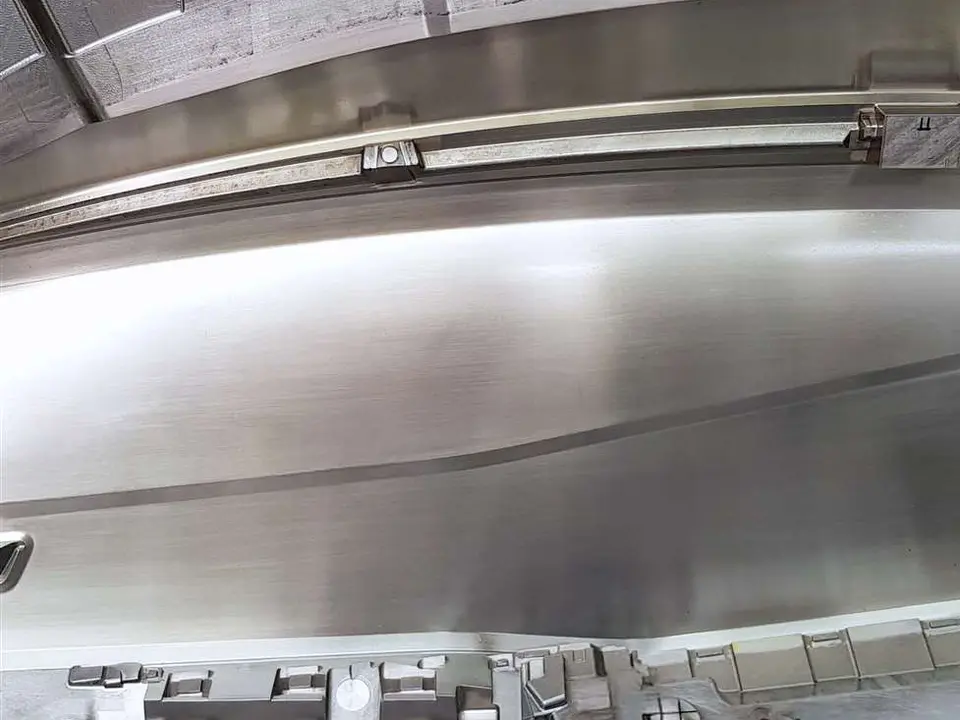
Mold polishing for defined surface finishes
The quality of an injection-molded surface depends heavily on the condition of the mold cavity. NOVA Surface uses carefully selected manual and machine polishing processes for both new and used injection molds. The objective is a uniform, repeatable finish without unwanted transitions, polishing marks or changes to the mold geometry.
Directional finishes, high gloss and skilled hand polishing
- Defined directional finishes for technical and cosmetic mold surfaces
- High-gloss and diamond polishing for premium molded plastic parts
- Pre-grinding and preparatory polishing before chemical etching or laser texturing
- Finishing of localized repair areas and adjustment to the specified gloss level
- Controlled polishing of complex three-dimensional contours
Matched to the mold geometry and steel grade
Simple contours can often be processed efficiently by machine. Complex 3D geometries, tight radii, parting edges and sensitive cosmetic surfaces require experienced manual finishing. We therefore match the process, tools and polishing media to the steel grade, initial condition and required surface quality.
Professional mold polishing can improve demolding, achieve specified roughness values and provide the correct foundation for subsequent coating or texturing processes. Before work begins, we document the mold condition and agree on the target finish and inspection criteria with the customer.
Technical overview
Our capabilities at a glance
- Verfahren
- Strich-, Hochglanz-, Diamant- sowie manuelle und maschinelle Politur.
- Einsatz
- Neue und gebrauchte Formflächen, Sichtbereiche, Reparaturstellen und Prozessvorbereitung.
- Specification Alignment
- Werkzeugstahl, Ausgangszustand, Geometrie, Rauheit und gewünschter Glanzgrad.
FREQUENTLY ASKED QUESTIONS
Fragen zur Werkzeugpolitur
Welche Polierarten bietet NOVA Surface an?
Das Spektrum umfasst definierte Strichpolituren, Hochglanz- und Diamantpolitur sowie manuelle und maschinelle Bearbeitung komplexer Formflächen.
Kann eine Formfläche für die Texturierung vorbereitet werden?
Ja. Vorschleifen und vorbereitende Politur schaffen je nach Verfahren eine gleichmäßige Ausgangsfläche für Ätz- oder Lasertexturierung.
Wovon hängt das Polierergebnis ab?
Entscheidend sind Werkzeugstahl, Ausgangszustand, Geometrie, vorhandene Bearbeitungsspuren und die vereinbarte Oberflächengüte beziehungsweise der Glanzgrad.